
Relevant Coursework
Water Engineering for International Development
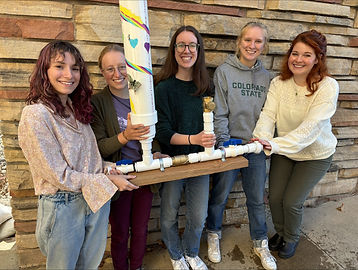
This course covers the design and implementation principles for water supply and sanitation projects in developing countries. Areas of emphasis include involving the local community, collecting the necessary data to develop these systems, and making preliminary designs. A highlight of the course is a group project to build and test a hydraulic ram pump, which can pump water uphill without an external source of electricity.
Environmental Engineering Concepts
Water quality and chemistry, wastewater removal and treatment, air pollution, noise pollution, sanitary landfill design. Additional discussions about sustainability, green engineering, and ethics.

Groundwater Engineering
Origin, movement, and distribution of subsurface water; development and management of groundwater resources; quality and remediation techniques.

Physical Hydrology
Hydrologic and atmospheric processes in the water cycle including precipitation mechanisms, evaporation, linear system theory, geomorphology and basin response, snowpack, and climate change.

Hydraulic Engineering
Fluid mechanics applied to practical problems in hydraulic engineering. Analysis and design of measurement, regulating, and control structures, open-channel flow systems, and specific energy and channel transitions.

Water Quality Modeling
Chemical, physical, and biological processes defining surface water quality; creation and application of computer models for lakes and streams using Excel and other relevant programs.

Environmental River Mechanics
Fluvial geomorphology, river hydraulics, sediment transport, and river response with emphasis on water quantity and quality issues related to management of riverine ecosystems; introduction to hydraulic modeling in HEC-RAS.
